AI Is Moving from Single Tools to Complete Workflows: Key Trends from Google I/O, Agentic AI, and Creative Platforms
 Camika
AI Is Moving from Single Tools to Complete Workflows: Key Trends from Google I/O, Agentic AI, and Creative Platforms
The AI industry is entering a new stage. This week’s biggest trend was not only a stronger model or a single new product. The stronger signal was that AI is moving from individual tools into complete workflows.
Google I/O 2026 pushed Gemini toward the agentic era. AI creative tools such as Flow and Flow Music showed how images, video, music, editing, and publishing can become connected production systems. OpenAI, xAI, Microsoft, Anthropic, IBM, and new AI hardware companies all pointed toward the same direction: AI is becoming more agentic, more workflow-based, and more production-ready.
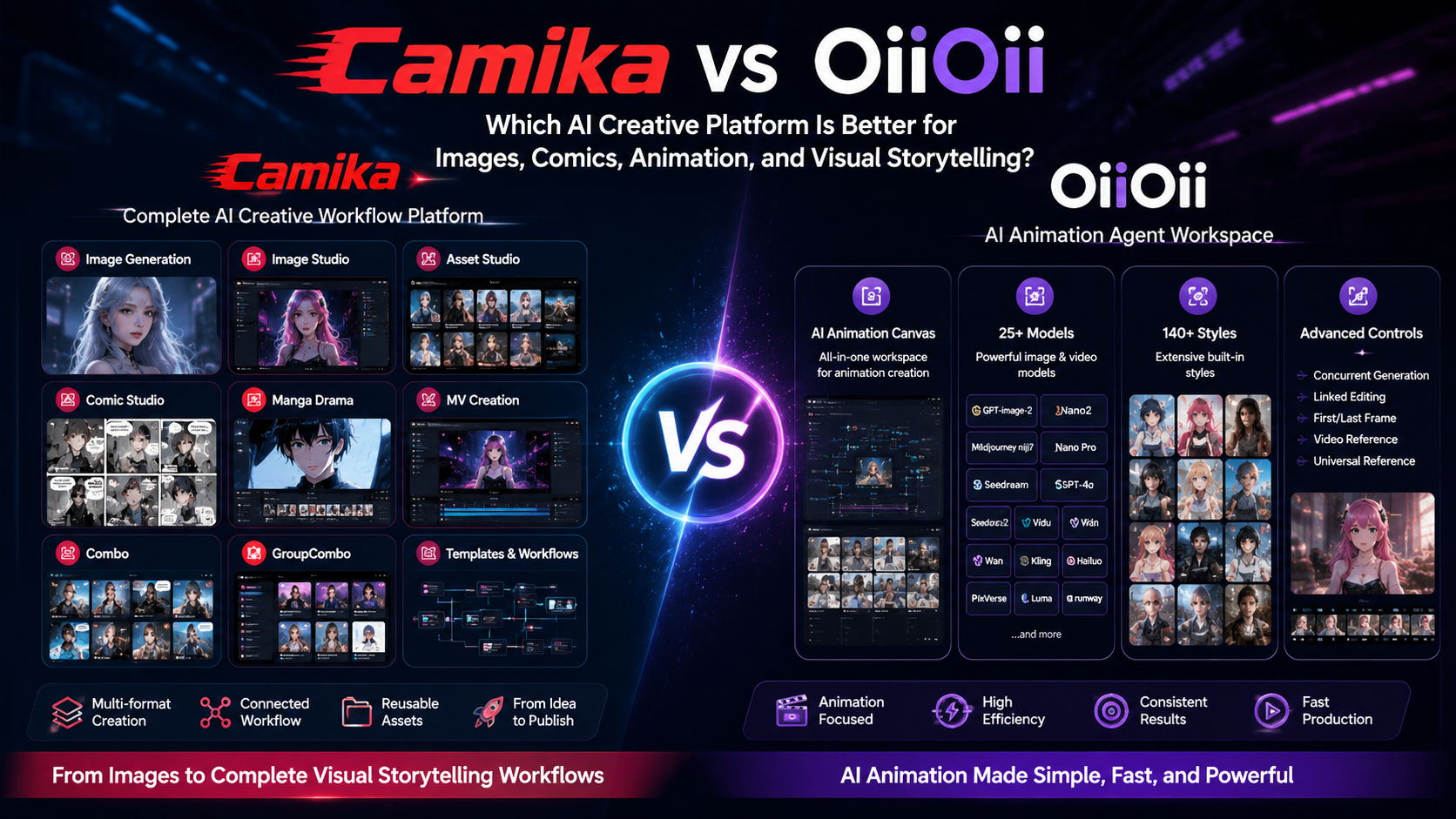
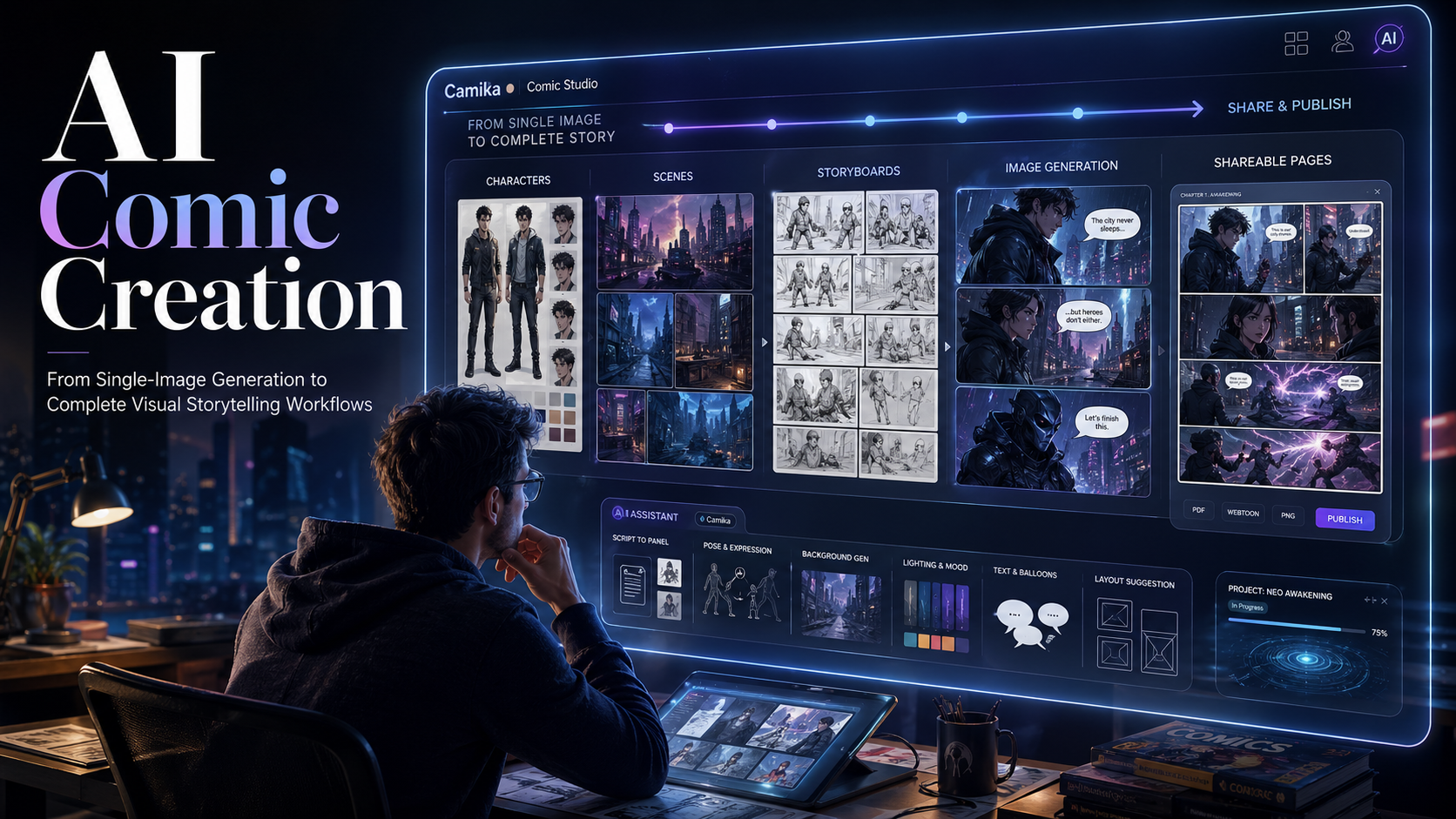
For platforms like Camika, this is a major opportunity. AI creation is no longer only about generating one image. It is becoming a complete creative process across image generation, assets, comics, manga drama, MV creation, templates, and shareable outputs.
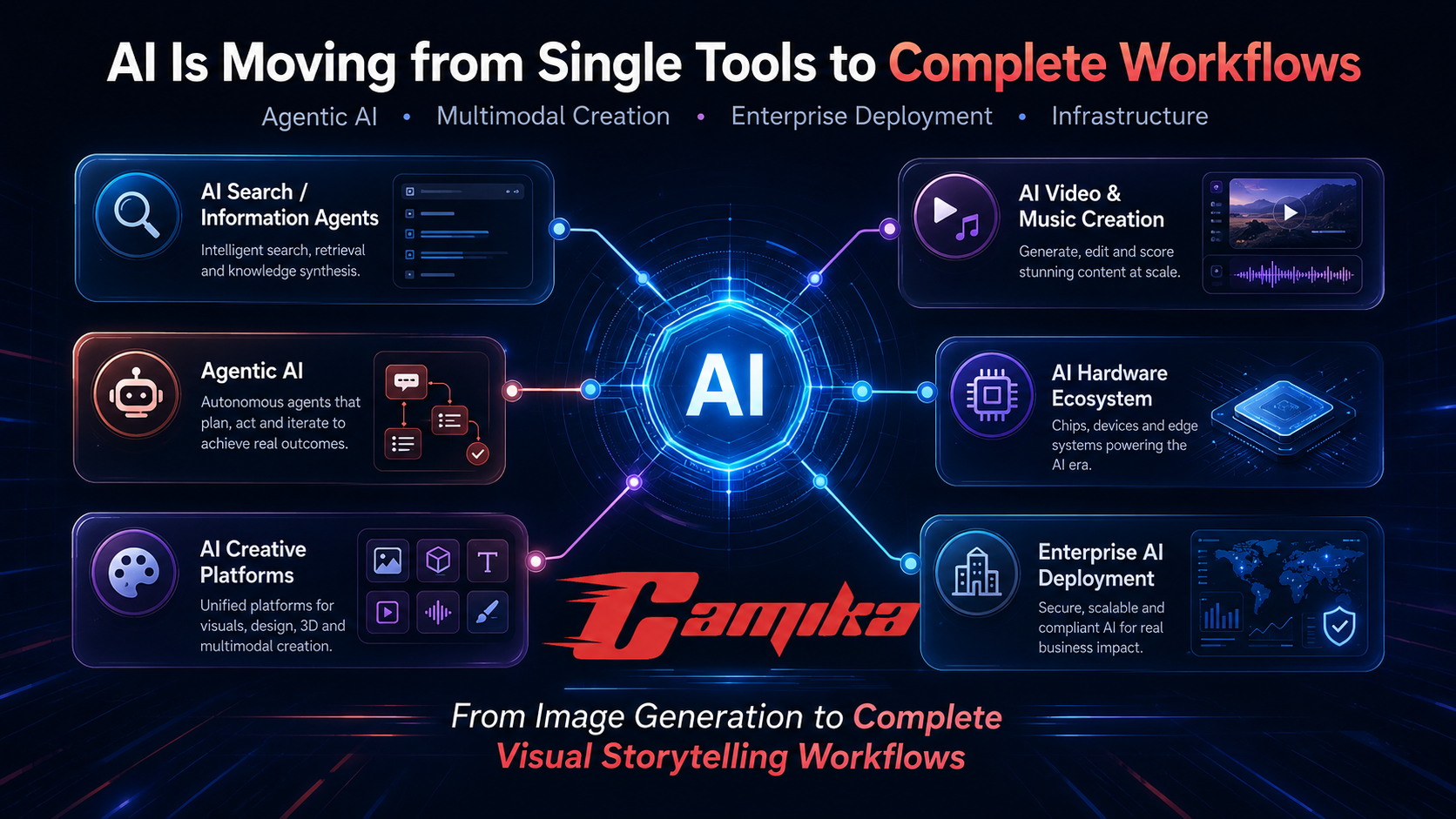
AI Is Entering the Workflow Era
This week’s AI industry news shows a clear direction: AI is no longer being defined only by model size, benchmark scores, or single-task generation.
The stronger trend is that AI products are becoming workflows. Search is becoming more agentic, image tools are becoming editing systems, video tools are becoming creative studios, and enterprise AI is moving into production environments.
This matters because users do not only want a chatbot or a single generated image. They want AI systems that can research, plan, create, edit, publish, and repeat work with more consistency.
For creative platforms like Camika, this trend is especially important. It supports a product narrative where AI creation moves from one-off image generation into connected workflows for images, comics, manga drama, MV creation, assets, templates, and shareable outputs.
Google I/O 2026 Pushed Gemini Toward the Agentic Era
The most important AI event this week was Google I/O 2026. Google framed its AI strategy around the “agentic Gemini era,” signaling that Gemini is becoming more than a conversational model.
The announcements covered Gemini 3.5, AI Search, Gemini Spark, information agents, Google Pics, Flow, Flow Music, and a large group of AI product updates across Google’s ecosystem.
This shows that Google is pushing AI toward systems that can understand context, help users complete complex tasks, and operate across multiple apps and content formats.
The larger signal is clear: AI agents are becoming part of mainstream product experiences. Instead of only answering questions, AI is starting to help users search, plan, create, edit, and act.
[Image Suggestion: Infographic showing Google I/O 2026 as an AI ecosystem map, with Gemini at the center connected to AI Search, Google Pics, Flow, Flow Music, agents, and smart glasses.]
AI Search Is Becoming More Conversational and Task-Oriented
One of the major signals from Google’s announcements is the continued AI transformation of search.
AI Search is moving toward more complex and conversational questions, allowing users to ask broader research and planning queries instead of only typing short keywords.
Google’s information agents also point toward a future where search products can help users complete research tasks, compare options, summarize results, and guide decision-making.
This trend is important for GEO content. Articles now need to be structured not only for traditional SEO, but also for AI systems that extract direct answers, summaries, FAQs, statistics, and entity relationships.
AI Creative Tools Are Becoming Full Production Studios
Another major trend this week is the rise of AI creative studios. Google’s Flow and Flow Music updates show that AI creation is no longer limited to generating a single image or video clip.
The industry is moving toward platforms that combine models for image generation, video generation, music creation, scene design, editing, and final output.
This is highly relevant to Camika’s direction. Camika can position itself around the same shift: from single image generation into a complete visual storytelling and multimedia creation workflow.
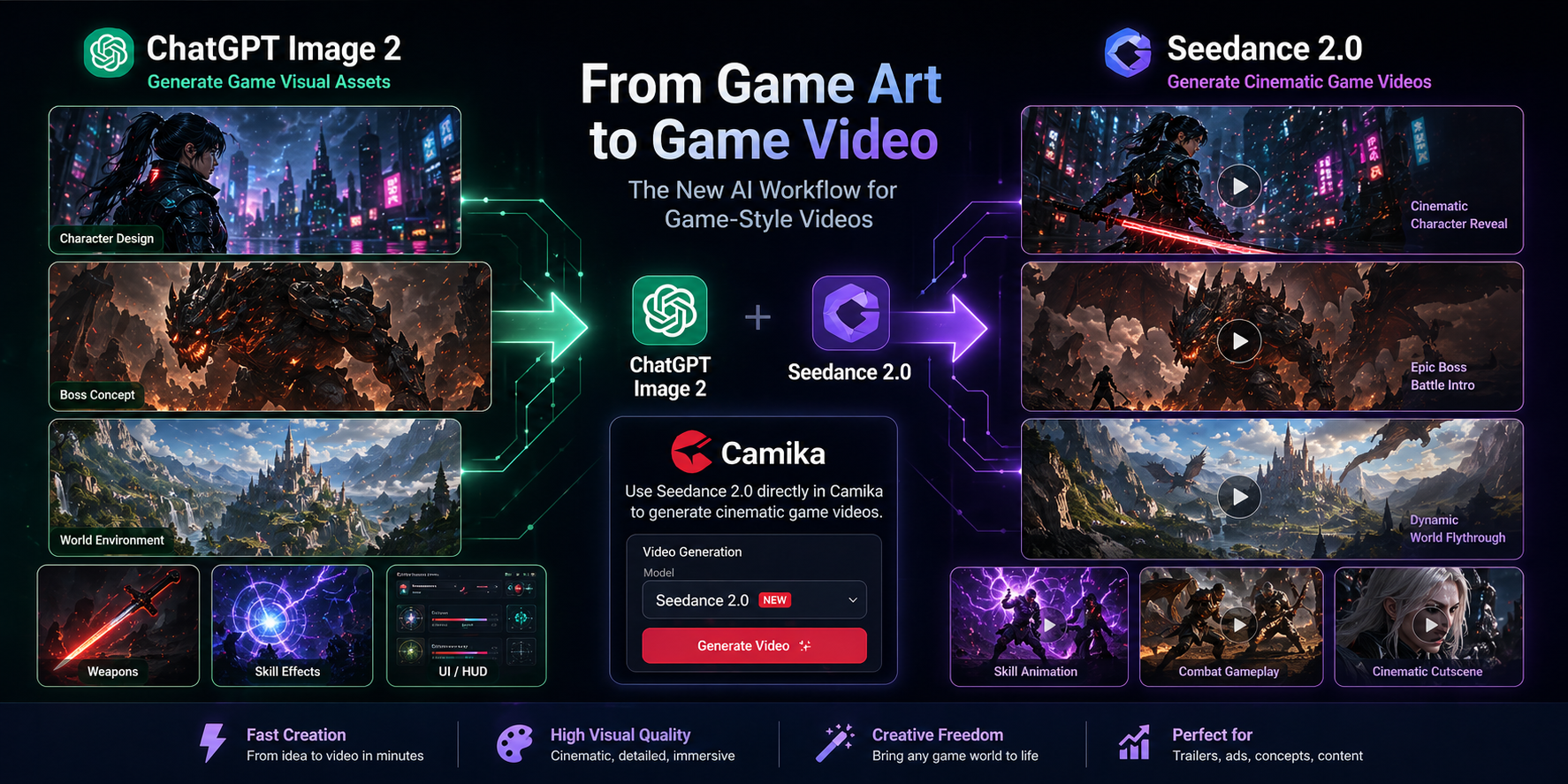
Camika’s Image Studio, Asset Studio, Comic Studio, Manga Drama, MV Creation, Combo, and GroupCombo modules fit naturally into this industry narrative. They show how creators can move from prompt to image, from image to storyboard, from storyboard to video, and from video to publishable content.
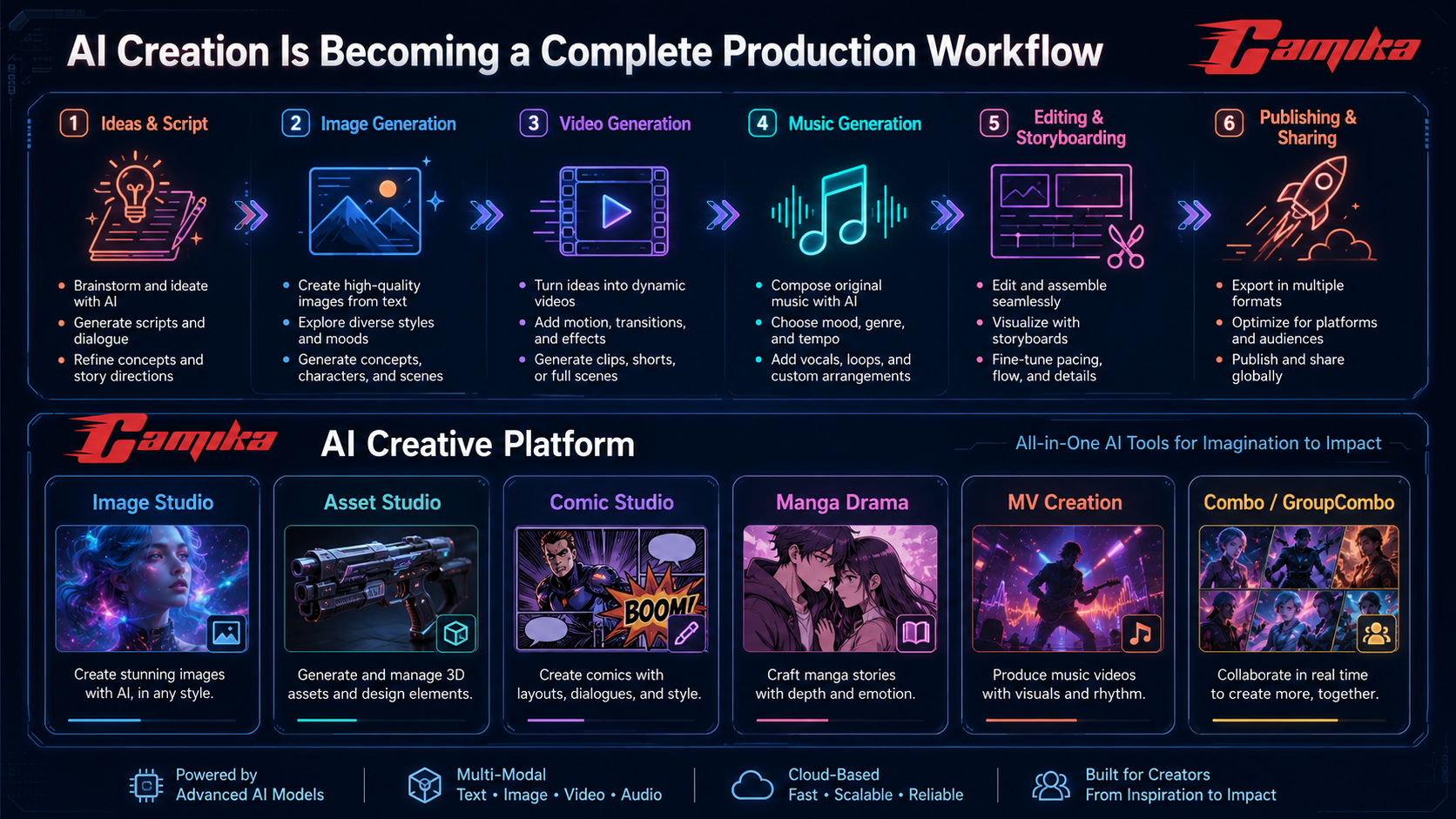
Google Pics Shows the Next Stage of AI Image Editing
Google Pics is another important signal from the week. It points toward a future where AI image tools can edit elements inside an image more intelligently, rather than treating the image as one flat output.
This matters because creators increasingly need control. They want to change a character, adjust a product, move an object, modify the background, or maintain visual consistency across multiple assets.
For Camika, this connects directly to Image Studio and Asset Studio. The opportunity is not only to generate images, but to help users manage, edit, reuse, and organize creative assets across workflows.
As AI image editing becomes more object-aware and production-oriented, creative platforms that support templates, reusable assets, and workflow continuity will become more valuable.
AI Video and Music Are Moving Toward Storytelling Workflows
Flow and Flow Music reflect a larger change in AI creation. AI video and AI music are becoming connected parts of storytelling workflows.
A modern AI creative workflow may include a script, characters, scenes, storyboard, video generation, music, voiceover, subtitles, editing, and final publishing.
This is exactly where Camika’s Manga Drama and MV Creation modules can be positioned. Manga Drama can support visual storytelling through storyboards, video generation, voiceover, and composition, while MV Creation can connect songs, scripts, assets, storyboards, and final videos.
The key message is that AI creators increasingly need workflow platforms, not just model access. The value is in helping users connect every creative step into one repeatable system.
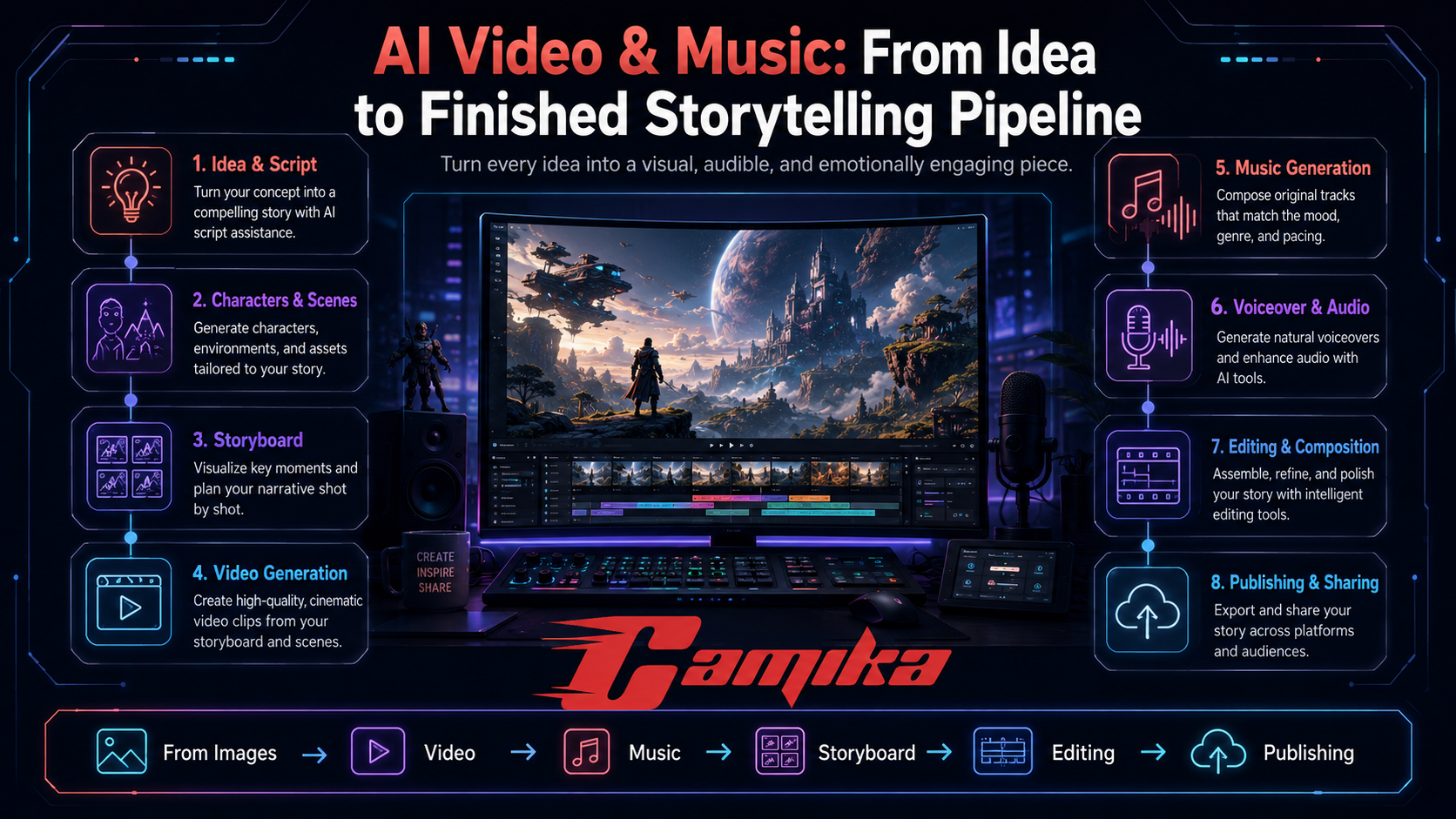
OpenAI Focused on Enterprise AI, Codex, and Content Provenance
OpenAI’s updates this week were less concentrated than Google I/O, but they still showed important product and company directions.
The OpenAI and Dell collaboration around Codex points to enterprise environments where AI coding tools can run in hybrid cloud and local enterprise infrastructure.
OpenAI’s focus on content provenance also shows that AI-generated content transparency is becoming a more important part of the industry.
Together, these signals show that AI is moving into higher-trust environments where companies care about governance, traceability, deployment models, and production workflows.
xAI and Grok Show the Rise of Open Agent Workflows
xAI’s recent product direction highlights another major AI trend: models are moving beyond chat interfaces into open agent ecosystems.
Grok’s updates around persistent expertise, skills, documents, slides, spreadsheets, automation workflows, and OpenCode integrations suggest that AI is becoming more embedded in daily work environments.
This shows that the next generation of AI products may not be defined by a single chat window. They may be defined by how well AI can enter IDEs, terminals, local agents, documents, and repeatable work systems.
For creators, the same idea applies. AI creation platforms need reusable skills, templates, assets, and workflows that help users produce content repeatedly instead of starting from zero every time.
Enterprise AI Is Moving from Pilots to Production
This week also showed that enterprise AI is moving from experimentation into real deployment.
Microsoft’s work with EY reflects a broader industry shift from AI pilots to enterprise-wide AI value creation. Companies are now asking how to scale AI safely, govern it, and connect it to existing business processes.
Microsoft 365 Copilot updates also show practical enterprise improvements, such as better email context handling and PDF interaction inside productivity workflows.
IBM’s Red Hat AI Inference on IBM Cloud points to the same direction: companies need managed inference, deployment control, lower operational complexity, and production-ready AI infrastructure.
AI Infrastructure and Hardware Are Becoming Strategic
AI infrastructure remained a major topic this week. Anthropic’s reported chip discussions and IBM’s managed inference updates show that compute strategy is becoming central to AI competition.
At the same time, hardware startups such as Hark show that investors still see strong potential in AI devices, personal AI systems, robotics, and local interaction.
The industry is no longer only about training larger models. It is also about making AI cheaper to run, easier to deploy, more available across devices, and more useful in real-world workflows.
This infrastructure layer will shape how quickly AI agents, creative workflows, enterprise tools, and consumer AI devices can scale.
What These Trends Mean for Camika
For Camika, the most important takeaway from this week is that the industry narrative is shifting toward complete workflows.
Google Flow and Flow Music validate the idea that AI creative tools are becoming studios. Google Pics validates the need for more controllable image editing. Agentic Gemini and Grok’s workflow updates validate the idea that AI should complete tasks, not only respond to prompts.
Camika can connect these trends into one product story: AI creation is moving from single outputs to reusable creative systems.
That story can highlight Camika’s image generation models, Image Studio, Asset Studio, Comic Studio, Manga Drama, MV Creation, Combo, and GroupCombo as parts of a larger AI creation workflow.
The strongest content angle for Camika is clear: from image generation to complete visual storytelling workflows.
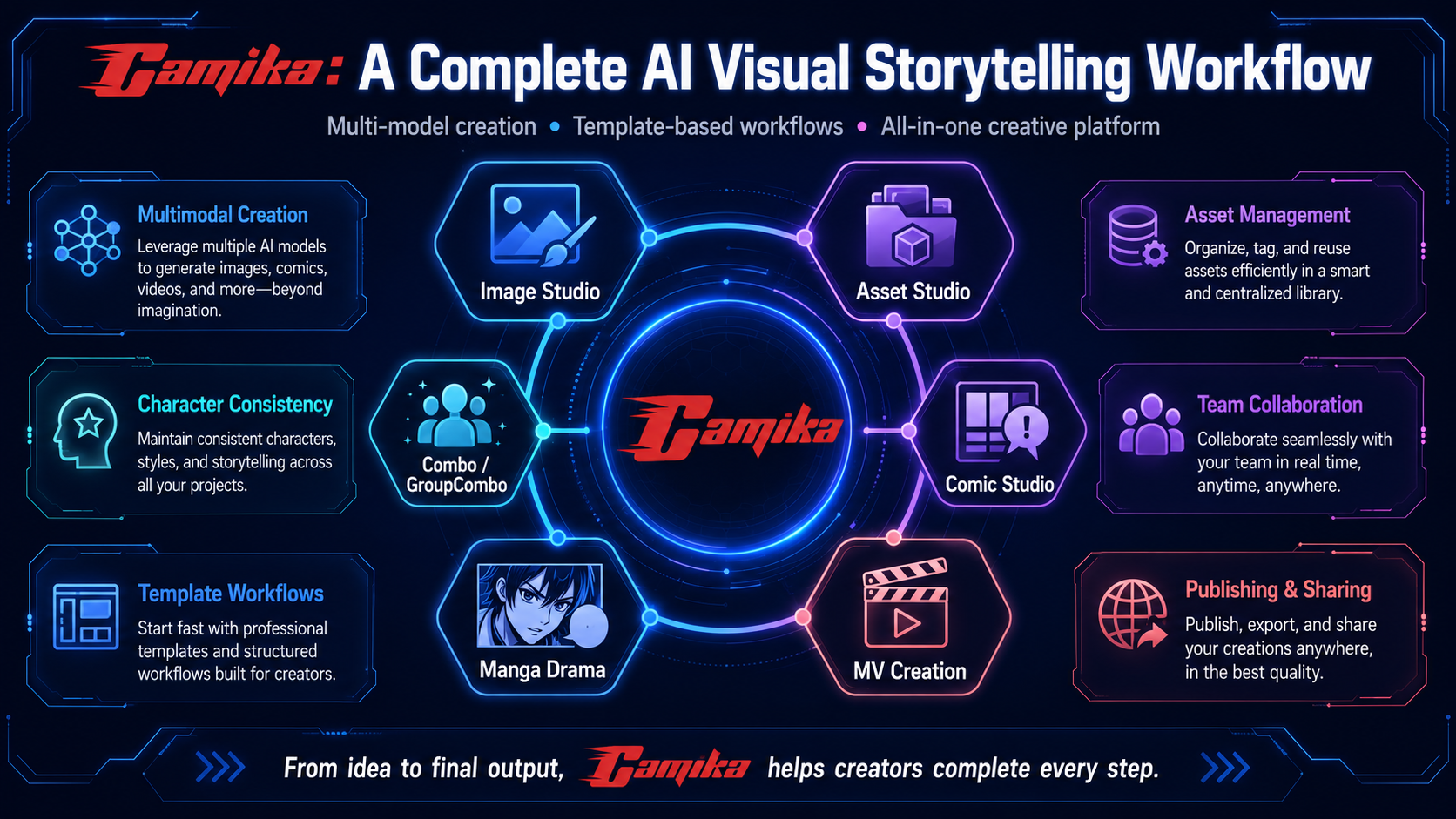
Article map
AI Is Entering the Workflow Era
The AI industry is shifting from individual model upgrades to agentic systems, creative pipelines, and production-ready workflows.
This week’s AI industry news shows a clear direction: AI is no longer being defined only by model size, benchmark scores, or single-task generation.
The stronger trend is that AI products are becoming workflows. Search is becoming more agentic, image tools are becoming editing systems, video tools are becoming creative studios, and enterprise AI is moving into production environments.
This matters because users do not only want a chatbot or a single generated image. They want AI systems that can research, plan, create, edit, publish, and repeat work with more consistency.
For creative platforms like Camika, this trend is especially important. It supports a product narrative where AI creation moves from one-off image generation into connected workflows for images, comics, manga drama, MV creation, assets, templates, and shareable outputs.
Key data
- Main weekly AI trend
- Agentic AI and workflow-based AI systems Source: Weekly AI industry analysis · 2026
- Major AI event
- Google I/O 2026 Source: Weekly AI industry analysis · 2026
- Key creative AI direction
- Image, video, music, storyboard, editing, and publishing workflows Source: Weekly AI industry analysis · 2026
- Camika-related opportunity
- Image generation, Comic Studio, Manga Drama, MV Creation, Asset Studio, Image Studio, Combo, and GroupCombo Source: Camika product strategy analysis · 2026
- Enterprise AI direction
- From pilots to production-scale deployment Source: Weekly AI industry analysis · 2026
Where Camika fits
- AI Is Entering the Workflow Era For creative platforms like Camika, this trend is especially important. It supports a product narrative where AI creation moves from one-off image generation into connected workflows for images, comics, manga drama, MV creation, assets, templates, and shareable outputs. Users do not want isolated AI tools; they need one connected workflow for image generation, comics, video, assets, and publishing.
- AI Creative Tools Are Becoming Full Production Studios Camika’s Image Studio, Asset Studio, Comic Studio, Manga Drama, MV Creation, Combo, and GroupCombo modules fit naturally into this industry narrative. Creators need a complete production workflow instead of switching between separate tools for images, videos, music, storyboards, and publishing.
- Google Pics Shows the Next Stage of AI Image Editing For Camika, this connects directly to Image Studio and Asset Studio. The opportunity is not only to generate images, but to help users manage, edit, reuse, and organize creative assets across workflows. Users need better control over generated images, reusable assets, and organized creative materials instead of creating everything from scratch each time.
- AI Video and Music Are Moving Toward Storytelling Workflows This is exactly where Camika’s Manga Drama and MV Creation modules can be positioned. Creators need to turn ideas, images, scripts, music, voiceover, and video clips into complete storytelling content.
- What These Trends Mean for Camika Camika can connect these trends into one product story: AI creation is moving from single outputs to reusable creative systems. Users need repeatable creative systems that can support consistent output, team workflows, and multi-format content production.
- What These Trends Mean for Camika That story can highlight Camika’s image generation models, Image Studio, Asset Studio, Comic Studio, Manga Drama, MV Creation, Combo, and GroupCombo as parts of a larger AI creation workflow. Users want one AI creation platform that covers images, comics, manga drama, music videos, assets, templates, and publishing workflows.
FAQ
What was the biggest AI industry trend this week?
The biggest trend was the shift from single AI tools to agentic and workflow-based AI systems. Google I/O 2026 emphasized the agentic Gemini era, while AI creative tools, enterprise AI products, and infrastructure updates all pointed toward more complete AI workflows.
Why was Google I/O 2026 important for AI?
Google I/O 2026 was important because Google positioned Gemini as part of an agentic AI ecosystem and introduced or showcased updates across AI Search, Gemini models, Google Pics, Flow, Flow Music, information agents, and smart devices.
How are AI creative tools changing?
AI creative tools are moving from single-output generation into full production workflows. Modern AI creative platforms increasingly connect image generation, video generation, music, editing, storyboards, assets, and publishing.
What does agentic AI mean?
Agentic AI refers to AI systems that can help users complete multi-step tasks, make decisions within a defined workflow, use tools, gather information, and act toward a goal rather than only answering a single prompt.
How does Camika fit into current AI trends?
Camika fits into current AI trends by focusing on connected creative workflows. Its modules for image generation, Image Studio, Asset Studio, Comic Studio, Manga Drama, MV Creation, Combo, and GroupCombo align with the industry shift from single AI outputs to complete visual storytelling and multimedia creation workflows.